NCAA proposes creating new subdivision, trust fund to compensate athletes
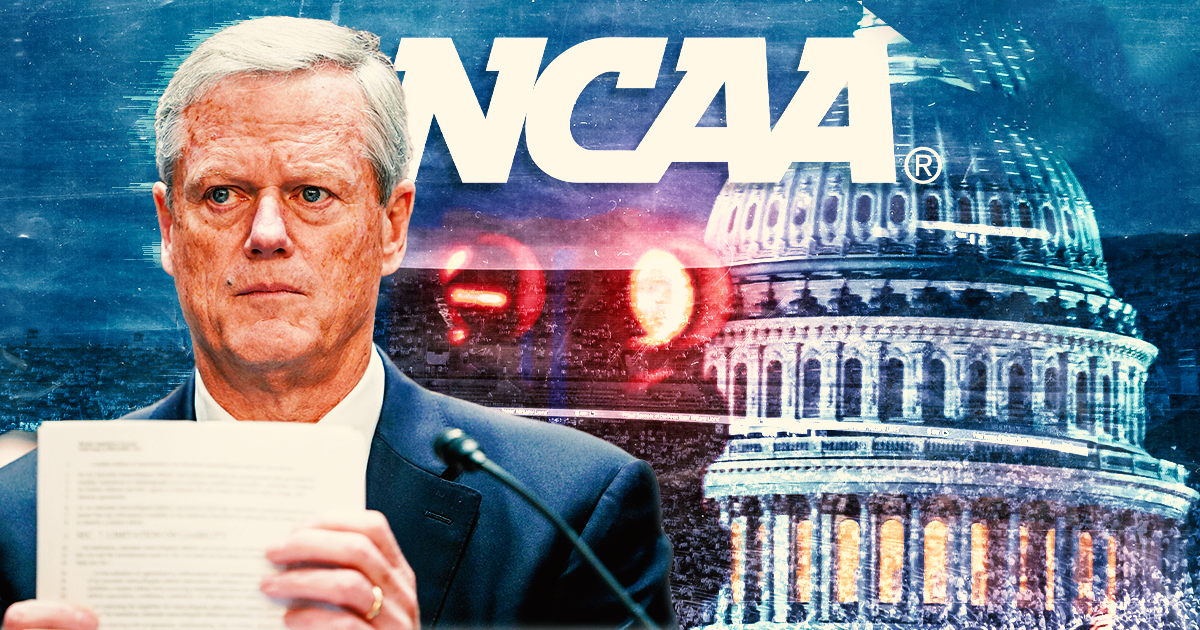
At a time when nearly everyone associated with college sports believes it’s critical for the NCAA to evolve, the association’s first-year president, Charlie Baker, on Tuesday detailed to his membership in writing a series of landmark, progressive changes that would radically alter the college sports enterprise.
The potential changes include creating a subdivision of Division I that affords them more freedom to craft their own policies and enables them to compensate athletes in innovative and consequential ways, according to the letter obtained by On3.
“It is time for us – the NCAA – to offer our own forward-looking framework,” Baker said in the letter.
The plan includes a potential new FBS subdivision that would include institutions with the highest resources.
Within the framework of Title IX, the letter reads, the plan entails the investment of at least $30,000 per year into an enhanced educational trust fund for at least half of the institution’s eligible student-athletes. And schools could work with others within the subdivision to create rules that may differ from the rules in place for the rest of Division I. Those rules could include a wide range of policies, such as scholarship commitment and roster size, recruitment, transfers or NIL.
Also of significance, the plan would allow any Division I school to enter into NIL licensing opportunities with their athletes. That is a dramatic departure from the current model, which heavily relies on third-party entities known as collectives to distribute NIL dollars to athletes through deals.
NCAA proposal is ‘revolutionary’
Mit Winter, a college sports attorney with Kansas City-based Kennyhertz Perry, told On3, “This is definitely the most revolutionary athlete compensation plan the NCAA has ever proposed.”
Winter cautioned that it is still a “half-measure” that would require federal intervention. This plan, Winter added, could placate some federal lawmakers, but it is uncertain whether it would garner enough support for the NCAA to secure a long-sought antitrust exemption. In addition, a federal law “would still need to say college athletes can’t be employees, which is still a big question mark.”
Baker acknowledged the increasing financial gap between schools as one of the catalysts for these changes.
“The growing financial gap between the highest-resourced colleges and universities and other schools in Division I has created a new series of challenges,” Baker said in the letter. “The challenges are competitive as well as financial and are complicated further by the intersection of name, image and likeness opportunities for student-athletes and the arrival of the transfer portal … Rules should change for any Division I school, at their choice, to enter into name, image and likeness licensing opportunities with their student-athletes.”
Longtime college football reporter Andy Staples of On3 was blunt in his assessment of the situation.
“In all seriousness, this is a stunning amount of common sense from the NCAA on a big-picture issue,” Staples said.
Baker acknowledged the NCAA is ‘slow to change’
Charlie Baker’s plan comes at a time when the NCAA faces an increasing number of significant, potentially even existential threats from the courts and other entities. The NCAA has been the target of increasing criticism among some stakeholders because it has opted against crafting a comprehensive new model for the industry.
The association acknowledges the outcome of the blockbuster House v. NCAA antitrust case could devastate the collegiate model as we know it. At stake is $4.2 billion in retroactive NIL pay and broadcast revenue that could be owed to thousands of athletes. It could also force the NCAA’s hand to allow schools to compensate athletes for any reason.
Also ongoing are proceedings related to two National Labor Relations Board cases that could ultimately deem at least some athletes employees of their universities. Dartmouth men’s basketball players are seeking to be deemed employees and conduct a union election. And USC, the Pac-12 and the NCAA face unfair labor practice charges stemming from allegedly misclassifying athletes as student-athletes rather than employees.
In addition, plaintiffs in Johnson v. NCAA, former Villanova football player Trey Johnson and other Division I athletes, are asking that athletes be deemed employees subject to the Fair Labor Standards Act.
Baker himself has told On3 in recent weeks that the NCAA has been “slow to change” and that he wants the association to be more nimble moving forward, especially on behalf of the interests of student-athletes.
These changes, Baker said in the letter, “will also help level what is fast becoming a very unlevel playing field between men and women student-athletes because schools will be required to abide by existing gender equity regulations as they make investments in their athletics programs.”
This is a breaking news story that will be updated.
The post NCAA proposes creating new subdivision, trust fund to compensate athletes appeared first on On3.